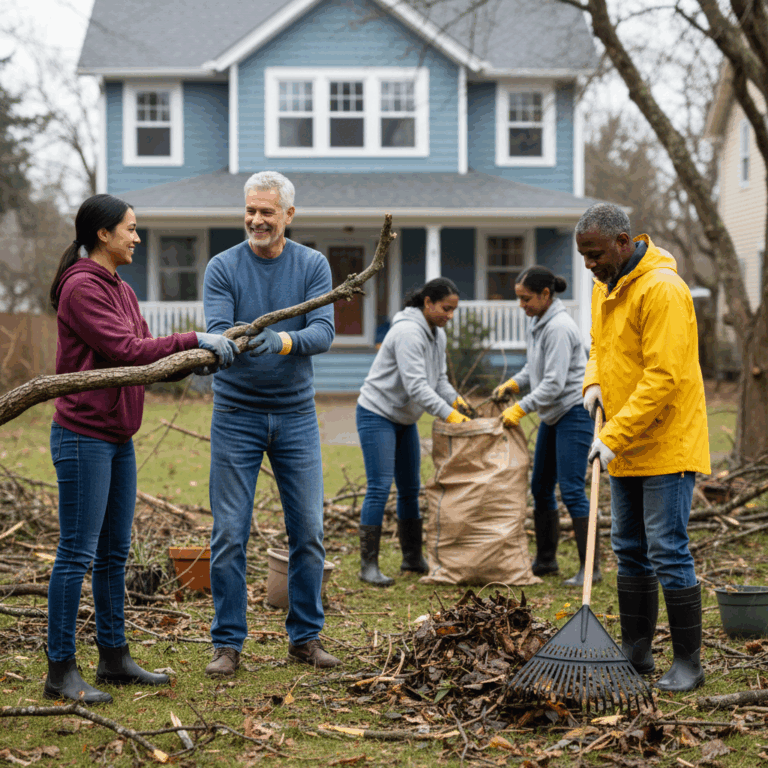
Storm Debris Cleanup for People Who Can’t Do It Themselves: Who to Call
May 28, 2026 · I Want To Mow Your Lawn
The Morning After: When Storm Debris Becomes a Crisis
A tree limb crashes through a roof. Power lines snarl across a driveway. A neighbor’s garage door hangs twisted off its hinges. These are the scenes in communities across the country as severe weather in 2026 has brought record tornado activity, alongside damaging winds, hail, and flash flooding.
For many people, clearing debris is simply a weekend project. For others—particularly older adults, veterans, and neighbors with limited mobility or resources—it becomes an impossible task that can trap them in unsafe conditions, rack up unexpected costs, and delay recovery for months.
This post outlines practical resources for storm cleanup and explains why helping neighbors clear debris matters more than most people realize.
The financial burden can be equally overwhelming. Landfill fees, contractor costs, and emergency repairs quickly accumulate. Reported instances of contractor fraud increased 38% from 2023 to 2025, meaning vulnerable homeowners face not only physical challenges but also the risk of being exploited by unscrupulous repair services during a moment of crisis.
Social isolation compounds the problem. Older adults who live alone, who are caregivers for loved ones, or who lack community connections often lack awareness of available resources and may lack the networks to ask for help.
Where to Call for Storm Cleanup Help
Local Disaster Relief Organizations
When major storms hit, local Voluntary Organizations Active in Disaster (VOAD) networks mobilize quickly. These are coalitions of nonprofits and faith-based groups that coordinate disaster response. VOAD chapters often manage debris removal work orders, connect residents with cleanup crews, and can advocate for waived landfill fees. To find your local VOAD, search “[Your State] VOAD” online or contact your county emergency management office.
Government Assistance Programs
After a federally declared disaster, the U.S. Small Business Administration (SBA) and FEMA may provide grants or low-interest loans for recovery. Check FEMA.gov to see if your area qualifies. Some states, like Missouri, have also created Private Property Debris Removal (PPDR) programs that help cover costs for eligible homeowners.
Volunteer Cleanup Networks
Community volunteer organizations—including groups like I Want To Mow Your Lawn—extend their service beyond regular lawn care during storm recovery. IWTMYL’s network of 1,800+ volunteers across all 50 states can help with initial debris clearing, yard cleanup, and exterior restoration as part of temporary relief efforts. Neighbors can connect with local volunteers through the organization’s platform or mobile app to request help in the weeks following a storm.
Faith-Based Organizations and Service Groups
Churches, synagogues, mosques, and civic organizations (Rotary, Lions Club, etc.) often mobilize volunteers for disaster cleanup. Call ahead to local congregations or service groups to ask about cleanup initiatives.
What to Do Before Calling for Help
Document damage. Take photos of debris, damaged property, and hazards for insurance claims.
Note safety concerns. Mark downed power lines, broken glass, or unstable debris to alert helpers about hazards.
Prioritize urgent needs. Focus on debris blocking exits, creating mold risk (wet drywall, insulation), or posing immediate danger.
Ask neighbors for referrals. Word-of-mouth recommendations are often more reliable than cold-calling contractors.
Why Community Help Matters
Debris cleanup is temporary relief that allows people to move forward safely. It’s not a permanent solution—it’s a practical, dignified way neighbors support neighbors when crisis strikes. For older adults and veterans managing recovery, volunteer help means the difference between staying in an unsafe home and reclaiming normalcy.
Communities that organize cleanup efforts also recover faster. Clear debris, restore yards, and people feel seen and supported during the hardest moments.
How to Help If You’re Able
If a neighbor or local community has been affected by severe weather, reaching out to local VOAD chapters, nonprofits, and mutual aid networks is the fastest way to organize cleanup. Volunteers are always needed.
Those interested in becoming part of a grassroots relief network can sign up to volunteer with I Want To Mow Your Lawn or explore the MOW app (available on the App Store) to connect with neighbors in their area who need exterior home care and storm recovery support.
Debris Clearing Fundamentals: A Practical Guide for Storm Cleanup Volunteers
Debris cleanup requires more than good intentions. Learn the safe techniques, essential tools, and step-by-step approach that keeps volunteers and homeowners protected while maximizing efficiency.
Safety First: Personal Protective Equipment and Hazard Assessment
Before touching any debris, assess the scene for hazards. Look for downed power lines, broken glass, nails, and unstable stacked materials. Establish a perimeter around any electrical hazard and never assume a line is safe—always treat it as live unless confirmed otherwise by utility crews.
Essential PPE for debris volunteers includes heavy-duty work gloves (leather or nitrile reinforced), steel-toed boots with good ankle support, safety glasses or a full face shield, a dust mask or respirator (especially around mold-prone wet debris), and a long-sleeved shirt or work jacket. High-visibility vests help crews stay visible to machinery operators and passing traffic.
Tool Selection and Technique
Start with hand tools: pruning saws, loppers, rakes, and wheelbarrows. Hand tools are quieter, safer, and more controllable than chainsaws, especially for volunteers without experience. For larger branches, two-person teams using a hand saw are faster and safer than solo chainsaw work.
When cutting branches, make three cuts: an undercut one-third of the way through the branch from below, a topcut slightly further out, and a final cut at the branch collar (the swollen base where it meets the trunk). This prevents the bark from tearing down the tree. For debris piles, always work from the outside inward, removing outer material first to prevent collapse.
Sorting and Disposal
Create three piles: woody debris (branches, logs), yard waste (leaves, grass clippings), and trash (metal, plastic, non-organic material). Many municipalities have free or reduced-fee disaster debris drop-off sites; sorting materials at the source speeds up processing and keeps contaminated material out of compost.
Document what’s been cleared with before-and-after photos. This helps the homeowner track recovery progress and supports insurance claims.
Working with Vulnerable Homeowners
Always check in with the homeowner before starting work. Ask about priorities: “Do you need the driveway cleared first so vehicles can move?” or “Would you prefer we focus on the roof debris first?” This gives the homeowner agency and helps volunteers focus effort where it matters most.
Debris cleanup is temporary relief—not a complete restoration. Set realistic expectations: “We can clear the yard debris today, but roof repairs will need a contractor.” This prevents misunderstanding and keeps the focus on what community volunteers can safely accomplish.
Team Coordination and Efficiency
Assign one person as the safety lead—someone who watches for hazards and calls breaks when fatigue sets in. Tired volunteers make mistakes. Rotate tasks every 30-45 minutes so people aren’t doing repetitive motion work all day.
For larger debris piles, a logistics person managing wheelbarrow flow and pile organization prevents bottlenecks. A hydration station with water and electrolyte drinks keeps energy up and prevents heat exhaustion, especially for older volunteers.
Connecting This Work to Community
Storm debris cleanup is one of the most visible ways neighbors support neighbors. It’s also where community volunteers—from organized groups like I Want To Mow Your Lawn to informal neighborhood teams—make tangible, immediate differences in people’s recovery. The skills learned here (safe tool use, efficient teamwork, hazard awareness) build capacity within communities to respond quickly and effectively when the next storm hits.
Support our foundation to unlock this resource
A donation of any amount unlocks all bonus guides, templates, and deep dives for 30 days.
100% goes toward connecting volunteers with neighbors in need.
Choose your donation amount
$
Choose how to donate:
I Want To Mow Your Lawn Inc. is a 501(c)(3) nonprofit and registered charity with PayPal Giving Fund. EIN: 85-3447661. Your donation is tax-deductible.
Have a group?Organize a Community Service Day — we'll match your team with neighbors who need help.
Want to help us reach more neighbors?Our Marketing Toolkit has copy-ready posts, press materials, and flyers you can share in five minutes.